
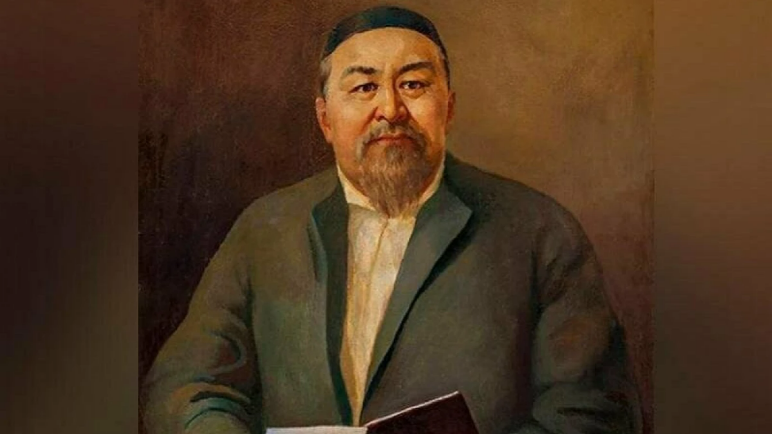
Abai Qūnanbaiūly[a] (10 August [O.S. 29 July] 1845 – 6 July [O.S. 23 June] 1904) was a Kazakh poet, composer and Hanafi Maturidi theologian philosopher.[2] He was also a cultural reformer toward European and Russian cultures on the basis of enlightened Islam.
Early life and education
Abai was born in Karauyl village in Chingiz volost of Semipalatinsk uyezd of the Russian Empire (this is now in Abay District of Abai Region, Kazakhstan). He was the son of Qunanbai and Uljan, his father’s second wife. They named him Ibrahim, as the family was Muslim, and he stuck with the name for the first few years of his life.
Ibrahim first studied at a local madrasah under Mullah Ahmed Ryza. During his early childhood years in Ryza’s tutelage, he received the nickname “Abai” (which means “careful”), a nickname that stayed with him for the rest of his life. His father was wealthy enough to send Abai to a Russian secondary school in Semipalatinsk. There he read the writings of Mikhail Lermontov and Alexander Pushkin, which were influential to his own development as a writer. Moreover, he was fond of reading eastern poetry, including the Shahnameh and One Thousand and One Nights.